|
|
|
|
|
|
|

|

|

|
|
Welcome back to The Bend!
|
|
The Bend follows a simple rhythm each week. The Eddy Line opens with a one-line thought or
observation, something short enough to remember but worth thinking
about. What the Current Pulled Toward dives a
little deeper into where the previous week’s energy went, whether that’s
a project, a partnership, or a personal lesson learned. Signal Fire highlights a person, place, or initiative
that deserves some attention. And One Thought Worth
Sitting With closes things out with a brief reflection or quote
that will hopefully help guide you through whatever you may be dealing
with.
New this week (and moving forward) is a section called
From the Field, which shares
a small anecdote about the broader outdoor recreation economy from
Oxbow’s non-profit arm, the VA MTNS Outdoor
Collective.
It’s part journal, part field note, and hopefully
something that makes you pause for a moment before diving back into the
current.
|
|

|
|

|
|
“The right person at the right time can change
everything.”
|
|

|
|

|
|
|
What the Current Pulled Toward
|
This week the current pulled toward
mentorship.
Through an established program with the
Virginia
Recreation and Park Society, I’ve had the privilege of mentoring
Amanda Terry, an up-and-coming professional with Montgomery County Parks
and Recreation. Watching her grow, ask questions, and navigate the field
with intention has been a very rewarding part of my professional life.
I’m humbled to play even a small role in that. She’s smart and creative
and driven and she’s going to do great things. That part is already
clear.
What’s been interesting,
though, is how much this experience has made me reflect on my own
path.
I’ve had some good supervisors over
the years. Helpful peers, too. But I never really had the benefit of a
formal mentorship program like the one Amanda and I are part of now.
Looking back, however, I did have mentors, they just weren’t called that
at the time.
The vast majority (if not
all) of them showed up through sports.
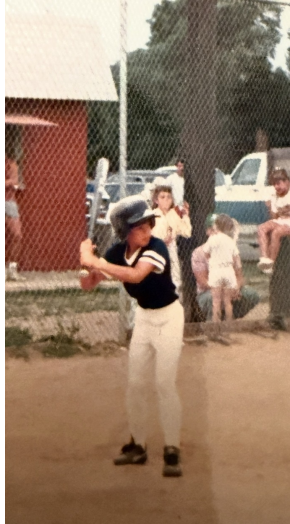
Guys like Henry Anderson, who coached me in rec baseball. I
remember him being particularly kind during a time when I was catching
grief from the other boys because of my long hair (I was dead set on
looking like Joe Elliott, the lead singer of Def
Leppard, come hell or high water). He showed compassion when it
would’ve been easier to just let it slide. I didn’t know it at the time
but that level of kindness, especially in sports, was rare.
Then there was David Dickenson, who coached me in
rec basketball a few years later. He didn’t even have a kid on the team
but he stepped up because we needed a coach. That was my first real look
at what showing up for something bigger than yourself looks like. No
real recognition. No personal stake. Just a commitment to your community
and the desire to give back a little. Honestly, I could point to that
act of selflessness as the foundation for my career in public service.
And then there was Nelson Fox, my
high school basketball coach. Probably the single biggest influence on
me as an adolescent. I was an athletic kid with average ability at best,
but he pushed me in ways I didn’t know I needed. Tough, but fair.
Demanding, but invested. He didn’t just care about wins, he cared about
who we were becoming. The crazy thing is, that mentality translated to A
LOT of wins. I was fortunate enough to be on two different state
tournament teams. But that’s beside the point. The point is, I wasn’t
alone or singled out in that relationship. He showed up that way for all
of his players. .
Honestly, none of
this does any of them justice. I could dedicate an entire newsletter to
each of them. The fact of the matter is they
were all in the business of youth development. Sports just happened to
be the vehicle.
And that’s the thing
about mentorship. It doesn’t always look formal. It doesn’t always
happen in offices or professional associations or structured programs.
Oftentimes it shows up in a dugout or a gym or just a conversation at
the exact moment you needed it.
Now,
being on the other side of it, I see how important it is to be
intentional about it, to create space for it, and to recognize that
growth doesn’t happen in isolation or in silos.
Mentors don’t have all the answers and they shouldn’t be
expected to. Quite simply, mentoring means showing up, paying attention,
and giving a damn.
- Mike.
|
|
|

|
|

|
The National
Interscholastic Cycling Association (NICA) has
built something pretty special in the world of youth sports. While
mountain biking is the platform, the mission goes well beyond
that.
Their focus is on
developing strong minds,
bodies, and character, prioritizing confidence, teamwork, and
personal growth over podium finishes.
In short, they’re placing an
emphasis on building good humans.
I
find that kind of philosophy incredibly important. It mirrors what so
many of us experienced growing up: when the best coaches weren’t the
ones who knew the most about the sport, but the ones who cared the most
about the kids.
Programs like NICA
reinforce the fact that the real win isn’t the result. It’s who someone
becomes along the way.
To learn more about the NICA, click
here.
|
|
|
|

|
|

|
|
Outdoor recreation in Virginia is a multi-billion
dollar contributor to the state’s economy, supporting jobs, small
businesses, and entire communities. Long gone are the days of trails and
rivers being viewed as just dirt and water.
In the latest
report
from the Bureau of Economic Analysis, outdoor recreation generated $1.3
trillion in economic output across the country, which represents 2.4% of
US GDP. That’s more than several staple industries like farming, mining,
and utilities.
The opportunity in
front of us isn’t just to protect it, it’s to organize around
it.
|
|
|

|
|

|
|
One Thought Worth Sitting With
|
|
This week’s theme: Mentorship.
“A good coach can change a game. A great coach can
change a life.“
-John Wooden
|
|

|
|

|
|
Follow Oxbow on Social Media
|
|

|
|
|
|

|
|

|
|
|
|
|
|
|
|